
Combined Arms Programming
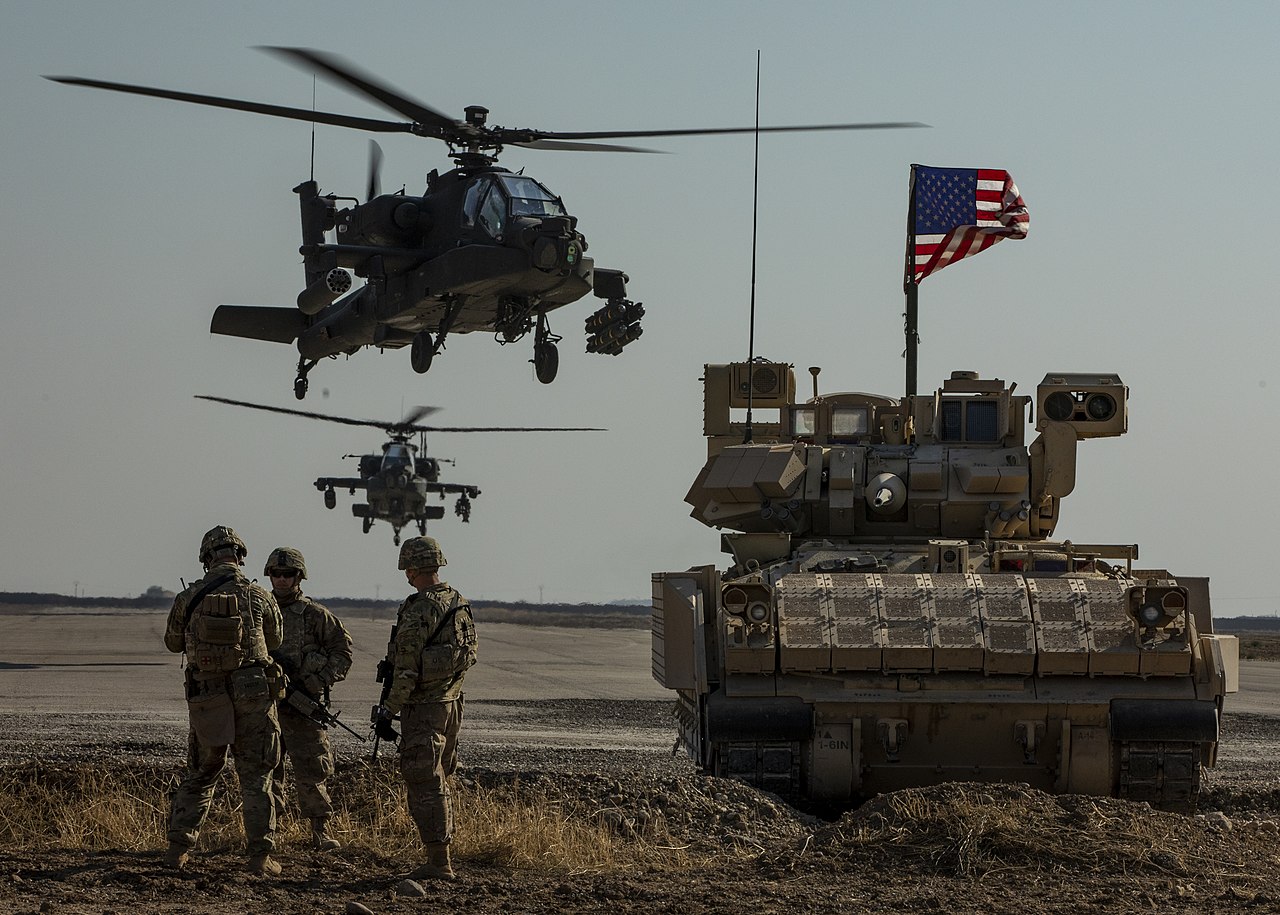
I recently listened to a podcast discussing the People’s Liberation Army’s recent pivot from a massive conscript force to a much smaller (and yet even more expensive!) professional military force. The point the podcast made was that China has been quietly observing the US and Russia and has realized that actual military power is no longer measured in the number of soldiers, tanks, or planes that you can muster, but rather on how well they work together.
Russia’s doctrine of “Deep Battle” is operationally sound. It exploits a tactical breach of the front line and if that proves successful, using deep, mobile, and relentless attacks. The problem for Russia is that such an approach requires a deep integration between the different branches. The Russian Airborne forces of the VDV need SEAD (Suppression of Enemy Air Defense) aircraft to ensure their safe landing at the airfields they need to seize. Russian armor in turn needs to penetrate through the front line so that Russian infantry can relieve the VDV, who are only lightly equipped and supplied. Meanwhile logistics needs to keep up with the advance while rocket forces neutralize enemy strongpoints encountered along the way.
The weakness of Russia’s integration of forces was on full display during the battle of Antonov Airport in February 2022. Russian SEAD failed to suppress Ukrainian air defenses, leading to the loss of several VDV helicopters on the initial assault. Russian armor was likewise unable to establish a breach in the Ukrainian lines in time, causing the VDV to “wither on the vine” as they exhausted their ammunition against Ukrainian counterattacks. Russian combat arms, rather than cooperating as a combined arms force, instead siloed themselves within their occupational specialties. This allowed them to be defeated in detail, leading to a defeat of the whole operation.
The more experienced developers amongst you probably immediately see the parallels to software engineering. Programmers, especially at large companies, are prone to silo themselves within their subject matter domains. Development teams throw bugs “over the wall” to Quality Assurance engineers rather than working with them to achieve a deeper understanding of the issues. Backend teams will blame frontend teams for misusing the APIs that they’ve developed. Frontend teams in turn will blame backend teams for slow response times or unexpected responses.
The irony is that just like Russia and China, these problems become more likely as companies get bigger. I suspect that a functional-based (and siloed) organization, rather than a product-based one, is easier for higher level management to understand. Rather than having to cope with fifteen unique team cultures and practices, they can grasp onto a web of feature throughlines common across all the products. Simultaneously, siloed teams offer a lot of obvious efficiencies that can easily translated into accomplishments for annual performance reviews. Code re-use is maximized since each team writes their code once and then packages it for consumption by other teams. All penny-wise investments that ultimately prove pound foolish as the Russians learned to their woe in 2022.
So, what’s the answer? The US Military circumvents the natural drift of larger organization towards silos through the adopted Prussian principle of “auftragstaktik”, or “mission-type tactics”. Under auftragstaktik leaders provide subordinates with a mission and commander’s intent, and then allow them the autonomy on how to achieve it. This is best parralled in the software world through the empowerment of product owners (as opposed to feature owners). These individuals (usually from marketing) identify and prioritize customer needs for their assigned product. They are embedded within cross-functional, self-sufficient teams responsible for a single, discreet application. All the specialties they could need, to include front-end & back-end developers, cybersecurity experts, quality assurance engineers, and UX/UI designers, are included in the team. Together they work collectivley on the most pressing needs of their customers as identified by the product owner, generating a product users’ actually want rather than maximizing a KPI (Key Performance Indicator) that an executive will see on a slide once and not spare a second thought to.
Admittedly this isn’t as efficient as a functional organization, and for larger organizations can be significantly more expensive as China is discovering in its modernization efforts. But for building a quality product that accomplishes its assigned mission, the vertical integration of product ownership is an indispensable organizational configuration.
By Photo by Spc. Jensen Guillory - https://www.dvidshub.net/image/6432856/m2-bradley-infantry-fighting-vehicles-northeast-syria, Public Domain, Link
Comments